Learning how to look expensive on a budget has almost nothing to do with what you spend. I promise. After years of styling clients in everything from Target finds to Saint Laurent, I can tell you the women who look the most polished are rarely the ones with the biggest credit limits. They’re the ones who understand fit, fabric, and a few quiet little tricks that don’t cost a thing.
I’m Sophia, and I grew up on a small Texas ranch where my grandmother had two rules about getting dressed: press it, and stand up straight. She wore the same six dresses for thirty years and looked like a million bucks every Sunday. That woman taught me more about style than any fashion magazine ever did — and the lessons are exactly what I’m sharing with you today.
Why Looking Expensive Has Nothing to Do with Your Price Tag
Let’s start with some numbers that might surprise you. According to U.S. Bureau of Labor Statistics clothing expenditure data, the average American household spends between $1,434 and $2,001 a year on apparel. That’s not nothing. And yet most of those garments get worn only 7 to 10 times before they’re tossed.
That’s the real problem. We’re not actually under-spending. We’re under-thinking. Empower financial research on clothing spending showed Americans cut their monthly clothing spend by 21.72% in early 2025, which means more of us are looking for ways to do more with less. Good. The smarter metric here is cost per wear: a $200 blazer worn 100 times costs you two dollars a wear. A $30 polyester top worn twice costs you fifteen.
My grandmother’s pressed cotton dress from 1968 still hangs in my closet. It looks more polished than any fast-fashion piece I’ve ever owned. That’s the energy we’re after. Here are the ten tricks that get you there.
Quick answer: To look expensive on a budget, focus on fit (tailor everything), fabric (natural fibers and Tencel), a neutral color palette, and impeccable maintenance. Skip logos, buy fewer but better accessories, and stand up straight. That’s the whole formula.
1. Master Fit Before Everything Else
If you only take one tip from this entire article, take this one. Fit is the single biggest factor every stylist I know cites when explaining why some women just look expensive. A $40 pair of trousers that fits you like a glove will always beat a $400 pair that bunches at the waist.
Clothes that pull, gap, or bunch read as discount no matter what brand is on the label. Clothes that skim your body cleanly read as custom — even when they came from Target.
What to Tailor and What to Skip
Most tailoring is cheaper than you think. Hemming pants, shortening sleeves, and nipping in a waist usually runs $15 to $40 in most cities. The exception? Jacket shoulders. If a blazer doesn’t fit through the shoulders, walk away. Reconstructing a shoulder seam can cost more than the jacket itself.
The Fit Formula by Garment Type
- Trousers: Should sit cleanly at the waist with no pulling at the hip, hem grazing the top of your shoe.
- Blazers: Shoulder seam ends exactly where your shoulder ends. Sleeve hits the wrist bone.
- Jeans: No gap at the back waistband. Need help finding your shape? My guide to the best jeans for your body type walks through every cut.
- Dresses: Skim — never cling, never tent.
When you’re choosing which pieces are worth tailoring, stick to the versatile workhorses. My build a capsule wardrobe guide breaks down exactly which silhouettes earn their tailoring fee back over and over.
2. Reach for Fabrics That Read as Luxurious
Fabric is the second-biggest tell. Synthetic fabrics move stiffly, catch the light in unflattering ways, and pill within a season. Natural fibers — linen, cotton, wool, silk — drape and breathe like nothing else.
Natural Fibers Worth the Investment
You don’t need to buy 100% silk to look like you did. A 60% wool blend is still infinitely better than 100% polyester. Look for high-percentage natural fiber blends on the inside label. Your skin and your camera roll will both thank you.
Budget-Friendly Alternatives That Fool the Eye
Here’s my favorite hack: Tencel (also called lyocell). It’s a wood-pulp derived fabric that drapes almost identically to silk for a fraction of the cost. H&M, Target, Quince, and Everlane all carry Tencel pieces under $50. I have a Quince Tencel slip skirt I’ve worn weekly for two years and people constantly ask if it’s vintage Halston.
Try the scrunch test next time you’re shopping. Scrunch a handful of fabric in your fist, hold it for ten seconds, then let go. Quality fabric springs back cleanly with minimal creasing. Cheap fabric holds the wrinkle permanently. It takes three seconds and saves you a hundred bad purchases.
Avoid shiny polyester satin, pilling fleece blends, and stiff fused interlinings. They photograph cheap and they feel cheaper.
3. Build Your Wardrobe Around a Neutral Color Palette
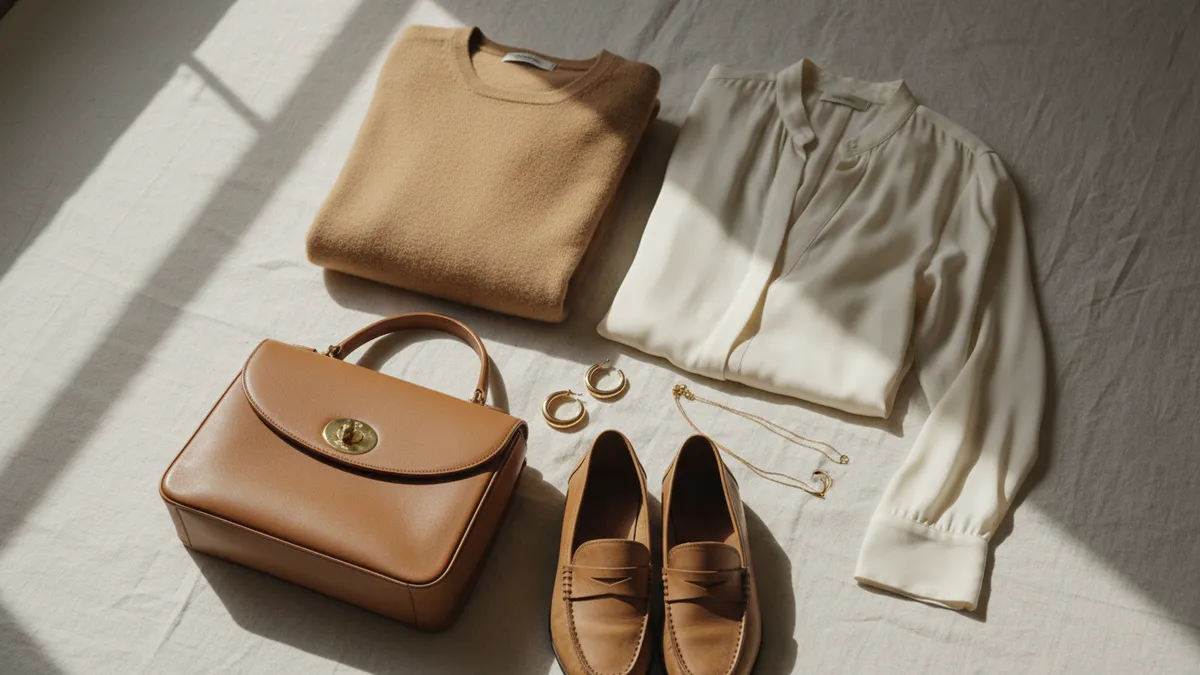
Camel. Ivory. Navy. Soft grey. Rich brown. Olive. These are the colors of quiet luxury, and they share one magical property: they all mix with each other. That means fewer pieces feel like more options.
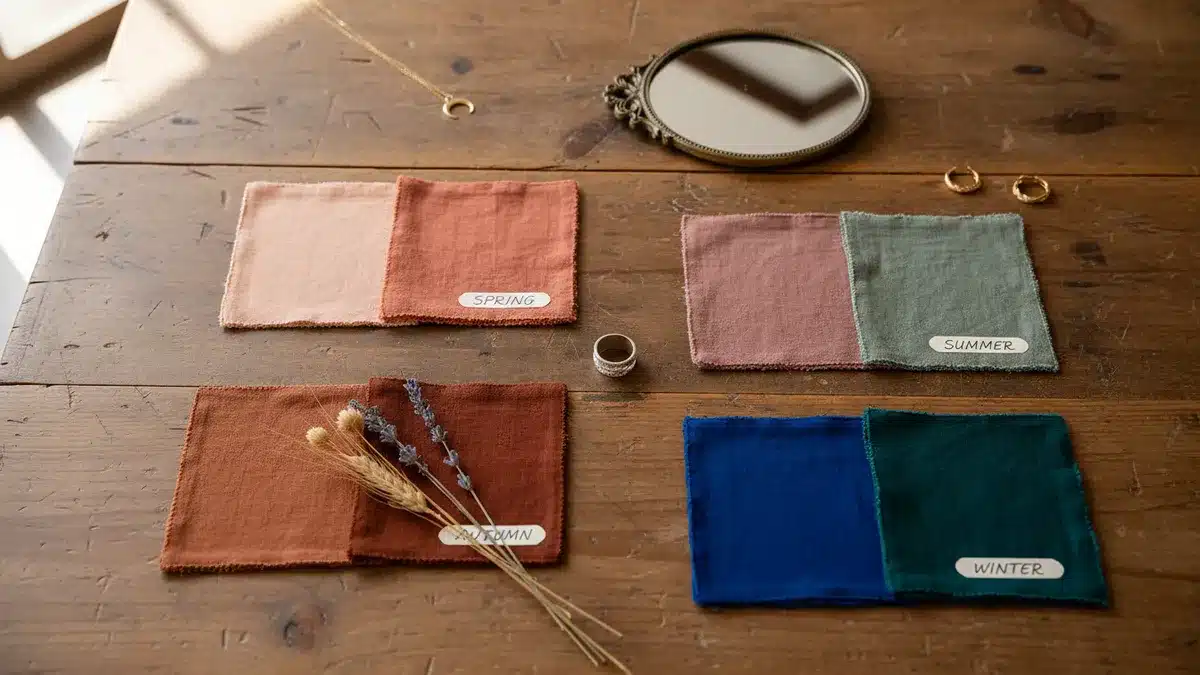
Now, not every neutral suits every complexion. I’m a warm-toned brunette, so cool greys make me look ill while camel makes me glow. Figuring out your own most flattering shades is genuinely life-changing — start with my seasonal color analysis guide to identify your season.
A well-chosen neutral trench, blazer, or knit elevates whatever you put underneath it. Speaking of blazers — they’re the one item I tell every client to invest in first. My style a blazer tutorial shows you fifteen ways to wear the same one.
4. Use Monochromatic Dressing to Look Instantly Polished
Head-to-toe tonal dressing is the oldest stylist trick in the book. Pick one color family and build the whole outfit within it. Cream linen trousers, ivory cotton tee, camel leather sandals. Done. You look like you have a stylist on retainer.
The trick that makes it sing? Texture variation. Same color, different materials. Linen plus silk plus suede plus leather, all in the same warm ivory family, creates depth without visual chaos.
Follow the two-color rule: limit visible colors to two for a cohesive look. As a bonus, monochromatic outfits elongate your silhouette — a particularly helpful trick for petite frames or anyone wanting to look a little taller. The French girl fashion playbook is built almost entirely on this principle.
5. Invest in Quality Accessories, Not Quantity
I’d rather have one beautiful leather handbag than five plasticky tote bags from the mall. Accessories are where the eye lingers, so this is where quality shows up loudest.
The Accessories That Signal Luxury
- One real leather handbag in a neutral shade. Care for it well and it lasts a decade.
- Shoes in good condition. Worn-down heels or creased pleather kill any outfit instantly.
- Simple gold-tone jewelry. Delicate hoops, a fine chain, a quiet cuff. My layer necklaces the right way piece breaks down exactly how to mix them.
- A signature stone or metal. For me, that’s turquoise — a nod to my Southwestern roots.
What to Put Back on the Shelf
Skip anything covered in costume crystals, plastic charms, or visible brand logos on budget pieces. And remember Coco Chanel’s old line: before you walk out the door, remove one accessory. Nine times out of ten, less truly is more.
6. Maintain Your Clothes Like They Cost a Fortune
This is the trick almost nobody talks about, and it might be the most important one on the list. Wrinkled, pilled, lint-covered clothes look cheap no matter what they cost.
A fabric steamer ($30–$60) is genuinely the best style investment I’ve ever made. Three minutes and a tired top looks crisp again. I keep a lint roller in my car, my purse, and by the front door. Yes, three.
My non-negotiable maintenance checklist:
- Steam or iron before every wear
- Lint roll before leaving the house
- Store knitwear folded, never hung (hangers stretch shoulders)
- Mend small pulls and loose buttons immediately
- Polish leather shoes monthly, wipe down others weekly
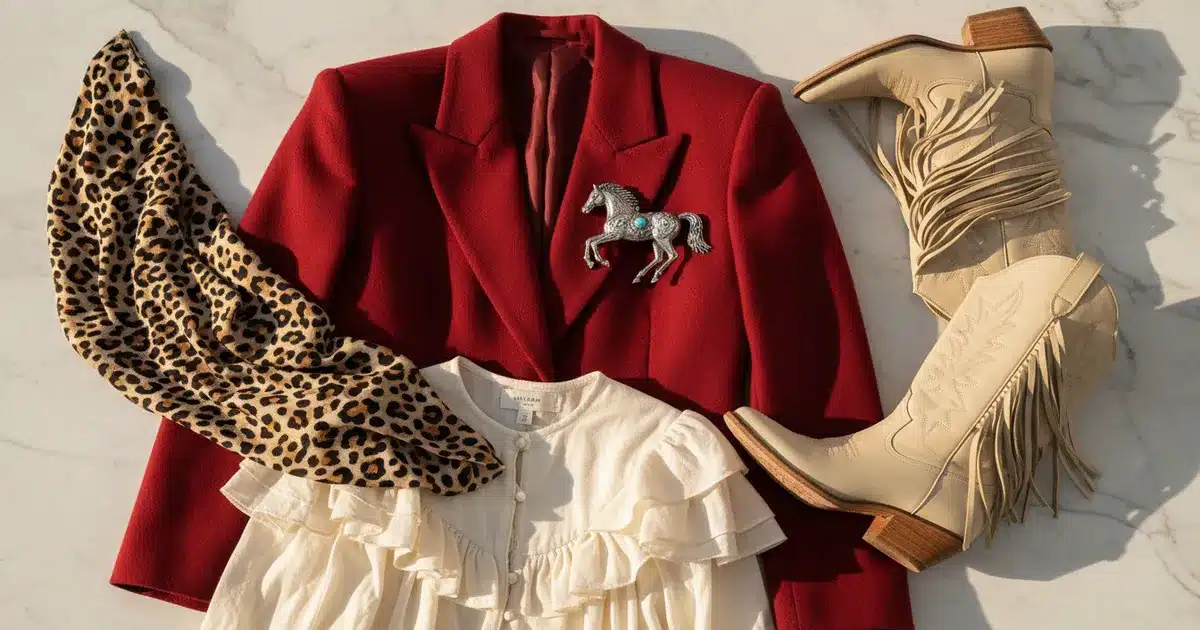
I inherited my grandmother’s collection of 1960s western dresses — heavy cotton, embroidered yokes, the works. They still look pristine sixty years later because she stored them properly, mended every little snag, and never wore them in disrepair. That kind of care turns a $30 dress into a forever piece.
7. Edit Your Wardrobe Ruthlessly: Less Is More
A cluttered closet creates cluttered outfits. Period. When you can see everything you own, getting dressed becomes easy, and easy dressing always looks more intentional.
The capsule wardrobe concept — 30 to 40 thoughtfully chosen pieces that all coordinate — creates more genuine outfits than 200 random ones ever will. If you’re new to the idea, the capsule wardrobe concept on Wikipedia is a great primer, and my own build a capsule wardrobe guide walks you through it step by step.
Donate, resell, or rehome anything that doesn’t fit, doesn’t suit your coloring, or makes you feel “meh.” If you want help cataloging what you’ve already got, the new generation of AI wardrobe organizer apps is genuinely magical for spotting gaps and stopping duplicate purchases.
8. Shop Smarter at Every Price Point
Looking expensive on a budget isn’t about never shopping — it’s about shopping well.
Where to Find Quality Without Paying Full Price
- End-of-season sales: Stock next year’s basics at 40–70% off in February and August.
- Thrift and resale: Designer pieces hide here if you have patience. Most of my vintage western dresses were under $20.
- Quality-focused affordable brands: Quince, Everlane, Uniqlo, Marks & Spencer, and Banana Republic Factory all do natural-fiber basics well. My best affordable women’s clothing brands roundup goes deeper.
I spend at least one Saturday a month combing thrift stores across Texas. Last spring I scored a 1970s Ralph Lauren silk blouse for $4. Four dollars. Patience is the budget shopper’s superpower.
Need to fund quality upgrades? Sell the pieces you edited out using the clothing resale apps I recommend. Turning closet clutter into cashmere is one of life’s small joys.
9. Cut the Visual Clutter: Clean Lines Win Every Time
“What matters more than the price tag is how well clothes fit, the quality of the pieces, and how thoughtfully an outfit is put together.” — Professional stylist quoted in BuzzFeed
Clean lines always read as expensive. Streamlined silhouettes — straight-leg trousers, a classic trench, a simple shift — look elevated without effort. Structure is elegance.
Avoid large visible logos on budget pieces (a dead giveaway for fast fashion), busy mixed prints on a tight budget, and excessive layering that looks chaotic instead of intentional. The quiet luxury movement is built entirely on this idea: no logos, no flash, just beautiful fabric and great fit. The street-style version of it is the clean girl aesthetic, which is essentially quiet luxury for everyday life.
This approach works at every age and stage. If you’re in the era of refining rather than chasing, my fashion tips for women over 40 leans hard into this clean-lines philosophy.
10. Stand Tall and Own It: Confidence Is the Final Layer
The most expensive thing you can wear is good posture. I mean that literally.
Good posture elongates your silhouette, communicates self-assurance, and makes any outfit look better — whether it cost twelve dollars or twelve hundred. How you move in your clothes matters as much as the clothes themselves.
My grandmother used to fix my slouching with one line, every single time: “Hold your chin up, sugar. That’s free, and it’s the most expensive thing you’ll ever wear.” She wasn’t wrong. I think about that sentence every time I catch my reflection in a store window.
If you’re still figuring out what feels like you, my guide to find your personal style is the right next step. Style is self-expression — never status.
The Bottom Line
Here’s everything in one breath: focus on fit, choose quality fabrics, build around neutrals, dress monochromatically, invest in a few good accessories, maintain everything like it’s couture, edit ruthlessly, shop smart, keep your lines clean, and stand up straight.
That’s the whole formula. Notice what’s missing? A big budget. Looking expensive is a mindset, not a price point. It’s about respecting your clothes, your body, and your own time.
If you want to keep going, start with my build a capsule wardrobe guide to put these principles into a workable system, then move on to find your personal style to make it unmistakably yours. Your most expensive-looking wardrobe is already half-built — you just needed the blueprint. Now go put on your favorite pieces and stand up straight. Grandmother’s orders.