Capri Holdings CEO John Idol identified Michael Kors footwear as the company’s “biggest issue” on the May 27, 2026 earnings call, as the group reported fourth-quarter fiscal 2026 revenue of $796 million — a 3.7% reported decline (down 7% on a constant-currency basis). The disclosure came as Capri posted full-year revenue of $3.47 billion, down from $3.62 billion in fiscal 2025, according to its Q4 and full-year fiscal 2026 results.
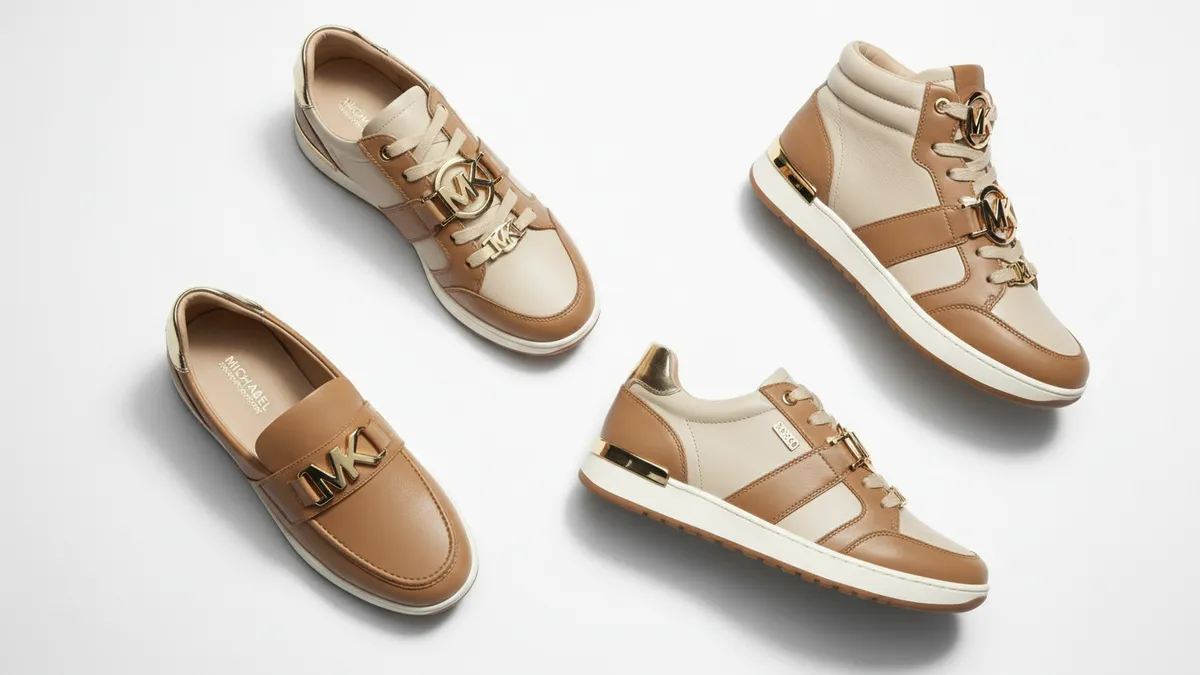
The Capri Holdings Michael Kors footwear 2026 turnaround now anchors the group’s recovery strategy. Capri operates as a two-brand portfolio — Michael Kors and Jimmy Choo — following the sale of Versace to Prada Group, completed December 2, 2025. The divestiture is detailed in the Prada Group Q1 2026 results.
Despite the revenue contraction, Capri reported a 490-basis-point expansion in gross margin to 64.8%, a sharply narrowed net loss, and reduced debt. Idol called the footwear issue inside Michael Kors the company’s most urgent operational priority.
Michael Kors Q4: Revenue Falls 5.5%, Footwear Pivot to Casual Underway
Michael Kors reported Q4 fiscal 2026 revenue of $656 million, down 5.5% reported and 8.4% on a constant-currency basis. Gross profit rose to $424 million on a 64.6% gross margin, up from $407 million and 58.6% in the prior-year quarter. Operating income climbed to $57 million, lifting operating margin to 8.7% from 4.6%.
“Footwear has been the biggest issue inside the company,” Idol told analysts. He said the brand is “leaning much more into the casual category, which is where there’s quite a bit of trend happening.” The pivot directly targets the segment driving growth in the broader luxury footwear market valued at $50.55 billion in 2026.
Three new casual styles anchor the relaunch: the Keely sneaker, Nolan sneaker, and Jennings loafer. Each was designed with Michael Kors heritage cues, executives said. Full-price stores already stock the new casual styles. Outlet locations receive the inventory in the fourth calendar quarter of 2026 — aligning the brand with shifting 2026 footwear trends.
Idol acknowledged prior strategic missteps. Earlier attempts to premiumize the accessible luxury label were described as “misguided.” The brand is returning to its “modern glamour” jet-set identity, a positioning tracked by the Lyst Index Q1 2026 brand rankings.
Jimmy Choo: Q4 Revenue Up 5.3%, Long-Term Target Set at $800 Million
Jimmy Choo posted Q4 fiscal 2026 revenue of $140 million, up 5.3% reported and flat on a constant-currency basis. Full-year revenue came in at $600 million, narrowly below the prior year’s $605 million. The brand is projecting approximately $625 million in fiscal 2027.
Idol described the brand as “on track” and confirmed a long-term revenue target of $800 million with expanded operating margins. A newly launched “profit improvement program” is designed to optimize costs and drive margin expansion by fiscal 2028.
Executives cited specific style performance: the Faiz lace pump leads the dress category, the Elisa ballet flat is anchoring casual growth, and the Sunny sneaker continues to gain share. Product momentum has been reinforced by recent launches including the Jimmy Choo Bon Bon capsule 2026 and high-profile celebrity placements such as Jimmy Choo at Cannes 2026.
Capri Holdings Fiscal 2027 Guidance: Operating Income Projected Up 60%
Capri guided to low single-digit revenue growth for fiscal 2027, a return to growth after two consecutive years of contraction. Gross margin is projected to expand by another 200 basis points. Operating income is forecast to rise approximately 60% year-on-year.
The guidance places Capri within a wider accessible-luxury rebalancing. Coach parent Tapestry posted strong gains in the comparable period, as detailed in the Tapestry Q3 2026 results. Aspirational players are also diverging: see Ralph Lauren record $8B FY2026 revenue and Burberry returns to profit in FY2026 for comparable turnaround context.
Post-Versace, Capri is narrowing its strategic focus. Both remaining brands are undergoing operational optimization simultaneously — a structural reset that, if guidance holds, would mark the company’s clearest path to recovery since the failed Tapestry acquisition. Additional background on the group’s challenges is available via Capri Holdings losses context.